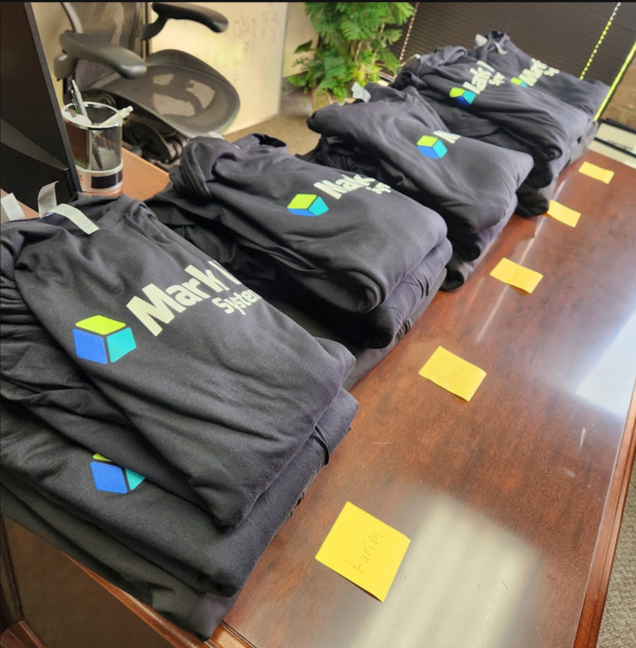

Most volunteer organizers do not plan to become buyers of shirts. Somebody on the committee says the team needs shirts, everyone nods, and suddenly the job is yours to procure them along with the bake sale and the sign-up sheet. Then you learn that screen printing in Houston usually starts at a minimum of 24 pieces, and your roster has only 17 players, three coaches, and a parent who may or may not want one. The math feels tight, and the deadline feels close, but this problem has more solutions than most first-time organizers expect.
Here is the good news. A mixed group of kids, adults, runners, and volunteers can still reach the minimum order threshold without paying for shirts that nobody will wear. The rules behind screen printing in Houston are simple once you see them laid out, and a little planning keeps the price per shirt friendly for parents and donors alike.
Why Screen Printing Orders in Houston Start at 24 Pieces
Screen printing needs to be set up before a single shirt gets inked. Each color in your design needs its own screen, and that screen must be prepared, aligned, and tested accordingly.
That setup work costs the same whether you print 24 shirts or 200 pieces. A larger order spreads that cost across more shirts, so each one costs less. A tiny order would carry the whole setup on a few shirts, and the price would sting the buyer.
So the 24-piece minimum is not an arbitrary hurdle. It is the point where the numbers start to make sense for both sides on the costing front
See also: How to Cook Gourmet Meals on a College Student Budget?
What Counts Toward the 24-Piece Minimum
This is where mixed rosters get some breathing room. You can combine different sizes, shirt colors, and even shirt styles to reach 24, as long as the printed design stays identical across every piece.
That means one order could include:
- Youth and adult sizes for players and parents
- T-shirts for runners and long sleeves for volunteers
- A couple of colors so coaches stand out from the team.
A few limits apply, and it is better to know them upfront:
- Mixed dark and light shirts may add an imprint color-change fee, since the ink setup changes between them.
- Polyester shirts carry an upcharge. That matters for charity races, where moisture-wicking shirts are popular.
- Embroidery has its own minimum of 12 pieces. Printed shirts and embroidered caps don’t count toward the same minimum.
Is a polyester race shirt worth the extra cost? Perhaps, for runners in a Houston spring. For a booster club picnic, plain cotton probably works fine.
A Charity Race Example: Getting From 19 to 24
Say you are organizing a neighborhood 5K. Nineteen runners have signed up so far, and the race is still five weeks away. Waiting for more sign-ups feels risky, and ordering short feels worse.
So what does that look like on paper? A few extra shirts usually come from places you already have:
- Race-day volunteers. Water stations, check-in tables, and course marshals all look more official in matching shirts.
- Sponsors. A local business that donated prizes may want a shirt or two for its staff.
- Late registrations. Most races accept walk-up runners, and a few spare sizes avoid awkward apologies.
- Committee members. The people who planned everything deserve a shirt too, honestly.
That list gets most groups past 24 without much effort. Some organizers even sell a handful of extras afterward to recover part of the cost, though that depends on your group’s rules.
Keeping the Per-Shirt Cost Friendly for Families
Parents often pay for team shirts themselves, so every dollar shows. A few choices keep the quote reasonable:
- White shirts cost slightly less than colored ones.
- One ink color costs less than three.
- A one-sided print costs less than front-and-back.
The lowest-cost setup is a white tee with a one-color print on one side. It is not the flashiest shirt in the stands. Still, a clean, simple design often looks sharper than a crowded one, and nobody on the bleachers will complain.
Sponsor logos on the back are a common request. They add an imprint location, though, so ask whether the sponsor money covers that extra cost before you commit.
Your Timeline From Sign-Up Sheet to Event Day
Turnaround typically runs two weeks after approval. For a game or a race, work backward from the date and add a few days for proof changes and sign-ups.
A rough plan might look like this:
- Five weeks out, finalize the design and file.
- Four weeks out, lock in your size count and place the order.
- Next day, review and approve the proof
- About two weeks later, your shirts are ready.
Every order runs through one named contact at 2LC Graphics, a Houston business that founder Claudia Lievano has been running since 2003. If your roster changes or you have a size question, you talk to someone who already knows your order- one less thing on your volunteer plate.
Visit https://2lcgraphics.com/houston-screen-printing/